Click on the link below to view the syllabus:
Glasgow Southern Medical Society
Royal Medico-Chirurgical Society of Glasgow
14 September, 2010
10 September, 2010
Notice of meeting: Presidential Address
‘BOMAD’
Speaker
Dr Gordon Weetch
Consultant Anaesthetist, Hairmyres Hospital
Date and time
Thursday October 7th 2010, 7pm
Buffet meal available from 6.15
Venue
The Ebenezer Duncan Centre, Victoria Infirmary,
Langside, Glasgow
Future meeting
Thursday, 11th November 2010: Prof Miles Fisher - Diabetes in Scotland 2010 - new
SIGN guideline and new Action Plan
Speaker
Dr Gordon Weetch
Consultant Anaesthetist, Hairmyres Hospital
Date and time
Thursday October 7th 2010, 7pm
Buffet meal available from 6.15
Venue
The Ebenezer Duncan Centre, Victoria Infirmary,
Langside, Glasgow
Future meeting
Thursday, 11th November 2010: Prof Miles Fisher - Diabetes in Scotland 2010 - new
SIGN guideline and new Action Plan

14 February, 2010
Listen to the lecture: Malaria - is eradication a realistic aim?

A thin-film Giemsa stained micrograph of ring-forms, and gametocytes of Plasmodium falciparum
Image: http://en.wikipedia.org/wiki/File:Plasmodium.jpg
Dr Heather Ferguson is one of the team at the University of Glasgow parasitology department. Her work both in Glasgow and Tanzania involves laboratory, field and theoretical investigation of malaria and the plasmodium life cycle.
Download the lecture to your mp3 player or listen online:
23 January, 2010
Notice of meeting: Malaria - is eradication a realistic aim?
Malaria - is eradication a realistic aim?
Dr Heather Ferguson

Image source under Creative Commons Attribution 2.5 licence: http://www.plosbiology.org/article/browseIssue.action?issue=info:doi/10.1371/issue.pbio.v03.i06
Dr Ferguson is one of the team at Glasgow University's parasitology department. Her work in both Glasgow and Tanzania involves laboratory, field and theoretical investigation of the plasmodium life cycle. She is ideally placed to update us on current management of malaria and to consider what the future might hold.
Thursday 11th February at 7pm
Ebenezer Duncan Centre, Victoria Infirmary
A buffet supper is available from 6.15pm
Guests are welcome to attend our meetings.
Dr Heather Ferguson
Image source under Creative Commons Attribution 2.5 licence: http://www.plosbiology.org/article/browseIssue.action?issue=info:doi/10.1371/issue.pbio.v03.i06
Dr Ferguson is one of the team at Glasgow University's parasitology department. Her work in both Glasgow and Tanzania involves laboratory, field and theoretical investigation of the plasmodium life cycle. She is ideally placed to update us on current management of malaria and to consider what the future might hold.
Thursday 11th February at 7pm
Ebenezer Duncan Centre, Victoria Infirmary
A buffet supper is available from 6.15pm
Guests are welcome to attend our meetings.
19 January, 2010
Notes from Dr MacIntyre on the meeting held on 26th November 2009
The 2nd Ordinary Meeting of the session was held in the Walton Suite at the Southern General Hospital. Perhaps partly for this reason and because of inclement weather, the attendance was very poor – only 10 members. The catering was not of the standard generally provided by the Catering Department at the Victoria. Despite this, those present enjoyed an informative evening with much discussion.
The President introduced three speakers contributing to a seminar on “Understanding Children’s Well-being”. Professor Charlotte Wright based at Yorkhill has been Project Lead in the UK for introduction of new WHO growth charts for children up to the age of four. These are to be introduced in January. They are based on growth patterns of healthy breast-fed children in non-smoking and non-deprived backgrounds in six different venues covering North and South America, Europe, Africa and Asia. Intriguingly the range of birth weights and the growth patterns of these children are identical in terms of height, though in the UK babies show a tendency to weight gain so that 6% are above the 98th centile at the end of the first year. Introduction of the charts includes detail for pre term infants and associated gestational adjustment, charts for parents allowing estimation of eventual height, and detail on measurement and use of the charts for health professionals.
Dr Helen Minnis is also based in Child Psychiatry at Yorkhill. The underlying theme of the whole evening was the importance of the first year of life and Dr Minnis started by pointing out the extent to which brain development takes place during that year and can therefore be susceptible to damage. Three identified mechanisms of this are simple delay in normal development, change in susceptibility to stress (particularly gluco-corticoid receptors), and influences on new neuronal development. This can affect different parts of the brain – thus for example the corpus callosum which probably has a role in integrating logical activity in the left hemisphere with perception and intuition on the right. Measurements of cortisol levels can be used as a marker of HPA axis activity. Studies have shown that the normal diurnal variation was lost in Romanian orphanage children and in maltreated children – with cortisol levels particularly suppressed in the latter. Intervention with improved individual child care during the first year reversed this biochemical pattern. It is thought that care and support which eases times of distress is particularly important. The term “reactive attachment disorder” was coined to describe characteristics of the children who have suffered this pattern of neglect. Some of these children are inhibited in all relationships. Others showed disinhibition in reaction to strangers, becoming over-friendly. Work currently underway in Glasgow is aimed at identifying at an early stage children at risk of this type of neglect and attempting close intervention through the usual agencies such as health visiting.
Dr Kerry Milligan’s background is in General Practice but particularly working with homeless and at risk families and in the area of child protection. Recent publicity over cases such as Victoria Climbie and Baby P have made this a difficult area of work with heavy workloads for staff, exacerbated by recruitment problems. Inevitably most of the attention in child protection work is directed at these high profile or crisis situations. Reporting on child protection is dominated by disasters or examples of bad practice. There has been a gradual increase in child protection registrations, particularly in relation to emotional abuse and physical neglect. Against this background there is a need for much more attention to the more general area of child protection. Risk factors can be identified – families where there is substance abuse, homelessness or poverty, young carers, asylum seekers. Early signs of behavioural disturbance are often present, both before and at school age. These can be picked up particularly if there is regular contact with families. Dr Milligan quoted an individual case report from 1945 which illustrated how little change there may have been in the problems and issues of child protection. However the opportunity is there through early identification and intervention with at risk families to improve outcomes.
Following a period of discussion Dr Kennedy Roberts thanked the speakers for their contributions to a small but clearly interested audience.
The President introduced three speakers contributing to a seminar on “Understanding Children’s Well-being”. Professor Charlotte Wright based at Yorkhill has been Project Lead in the UK for introduction of new WHO growth charts for children up to the age of four. These are to be introduced in January. They are based on growth patterns of healthy breast-fed children in non-smoking and non-deprived backgrounds in six different venues covering North and South America, Europe, Africa and Asia. Intriguingly the range of birth weights and the growth patterns of these children are identical in terms of height, though in the UK babies show a tendency to weight gain so that 6% are above the 98th centile at the end of the first year. Introduction of the charts includes detail for pre term infants and associated gestational adjustment, charts for parents allowing estimation of eventual height, and detail on measurement and use of the charts for health professionals.
Dr Helen Minnis is also based in Child Psychiatry at Yorkhill. The underlying theme of the whole evening was the importance of the first year of life and Dr Minnis started by pointing out the extent to which brain development takes place during that year and can therefore be susceptible to damage. Three identified mechanisms of this are simple delay in normal development, change in susceptibility to stress (particularly gluco-corticoid receptors), and influences on new neuronal development. This can affect different parts of the brain – thus for example the corpus callosum which probably has a role in integrating logical activity in the left hemisphere with perception and intuition on the right. Measurements of cortisol levels can be used as a marker of HPA axis activity. Studies have shown that the normal diurnal variation was lost in Romanian orphanage children and in maltreated children – with cortisol levels particularly suppressed in the latter. Intervention with improved individual child care during the first year reversed this biochemical pattern. It is thought that care and support which eases times of distress is particularly important. The term “reactive attachment disorder” was coined to describe characteristics of the children who have suffered this pattern of neglect. Some of these children are inhibited in all relationships. Others showed disinhibition in reaction to strangers, becoming over-friendly. Work currently underway in Glasgow is aimed at identifying at an early stage children at risk of this type of neglect and attempting close intervention through the usual agencies such as health visiting.
Dr Kerry Milligan’s background is in General Practice but particularly working with homeless and at risk families and in the area of child protection. Recent publicity over cases such as Victoria Climbie and Baby P have made this a difficult area of work with heavy workloads for staff, exacerbated by recruitment problems. Inevitably most of the attention in child protection work is directed at these high profile or crisis situations. Reporting on child protection is dominated by disasters or examples of bad practice. There has been a gradual increase in child protection registrations, particularly in relation to emotional abuse and physical neglect. Against this background there is a need for much more attention to the more general area of child protection. Risk factors can be identified – families where there is substance abuse, homelessness or poverty, young carers, asylum seekers. Early signs of behavioural disturbance are often present, both before and at school age. These can be picked up particularly if there is regular contact with families. Dr Milligan quoted an individual case report from 1945 which illustrated how little change there may have been in the problems and issues of child protection. However the opportunity is there through early identification and intervention with at risk families to improve outcomes.
Following a period of discussion Dr Kennedy Roberts thanked the speakers for their contributions to a small but clearly interested audience.
30 August, 2009
Programme 2009-10, Session 165
Friday September 4th from 1.45pm
Golf outing - Whitecraigs Golf Club.
Thursday October 8th
Presidential address - Dr Saket Priyadarshi
'From malaria to methadone. Treatment works!'
Thursday October 29th
Annual dinner. Roma Mia restaurant, Pollokshields.
Thursday November 5th
Joint meeting with Royal Medico-Chirurgical Society of Glasgow.
'Preparing tomorrow's doctors for practice' Prof Jill Morrison.
7 for 7.30pm RCPSG 242 St Vincent St.
Thursday November 26th (date and venue to be confirmed)
Symposium – 'Health, happiness and protection - understanding childrens' well-being' Prof Charlotte Wright, Dr Kerry Milligan, Dr Helen Minnis.
Thursday January 14th
'Just a little prick with a needle - treating macular degeneration' Dr William Wykes.
Thursday February 11th
'Malaria - is eradication a realistic aim?' Dr Heather Ferguson.
Thursday March (date to be confirmed)
Honorary Presidential address - Dr Kennedy Roberts OBE
'Prisoners, drug users, homeless people and medicine'
Thursday April 22nd, 7pm
Annual General Meeting - Conference room, Floor E, Victoria Infirmary
GSMS Office bearers 2009/10
Honorary President - Dr Kennedy Roberts OBE
President - Dr Saket Priyadarshi
Past President - Dr Douglas McLellan
Vice President - Dr Gordon Weech
Honorary Treasurer - Dr Liam McKean
Secretary - Dr Duncan MacIntyre
Duncan.MacIntyre@ggc.scot.nhs.uk
Dept of Respiratory Medicine, Victoria Infirmary
Royal Medico-Chirurgical Society of Glasgow
Members are welcome to attend meetings of our sister society held at 7 for 7.30pm in the Royal College of Physicians & Surgeons.
View the syllabus of the 196th session here.
Golf outing - Whitecraigs Golf Club.
Thursday October 8th
Presidential address - Dr Saket Priyadarshi
'From malaria to methadone. Treatment works!'
Thursday October 29th
Annual dinner. Roma Mia restaurant, Pollokshields.
Thursday November 5th
Joint meeting with Royal Medico-Chirurgical Society of Glasgow.
'Preparing tomorrow's doctors for practice' Prof Jill Morrison.
7 for 7.30pm RCPSG 242 St Vincent St.
Thursday November 26th (date and venue to be confirmed)
Symposium – 'Health, happiness and protection - understanding childrens' well-being' Prof Charlotte Wright, Dr Kerry Milligan, Dr Helen Minnis.
Thursday January 14th
'Just a little prick with a needle - treating macular degeneration' Dr William Wykes.
Thursday February 11th
'Malaria - is eradication a realistic aim?' Dr Heather Ferguson.
Thursday March (date to be confirmed)
Honorary Presidential address - Dr Kennedy Roberts OBE
'Prisoners, drug users, homeless people and medicine'
Thursday April 22nd, 7pm
Annual General Meeting - Conference room, Floor E, Victoria Infirmary
GSMS Office bearers 2009/10
Honorary President - Dr Kennedy Roberts OBE
President - Dr Saket Priyadarshi
Past President - Dr Douglas McLellan
Vice President - Dr Gordon Weech
Honorary Treasurer - Dr Liam McKean
Secretary - Dr Duncan MacIntyre
Duncan.MacIntyre@ggc.scot.nhs.uk
Dept of Respiratory Medicine, Victoria Infirmary
Royal Medico-Chirurgical Society of Glasgow
Members are welcome to attend meetings of our sister society held at 7 for 7.30pm in the Royal College of Physicians & Surgeons.
View the syllabus of the 196th session here.
22 August, 2009
Listen to the Lecture: Honorary Presidential Address - Joseph Lister
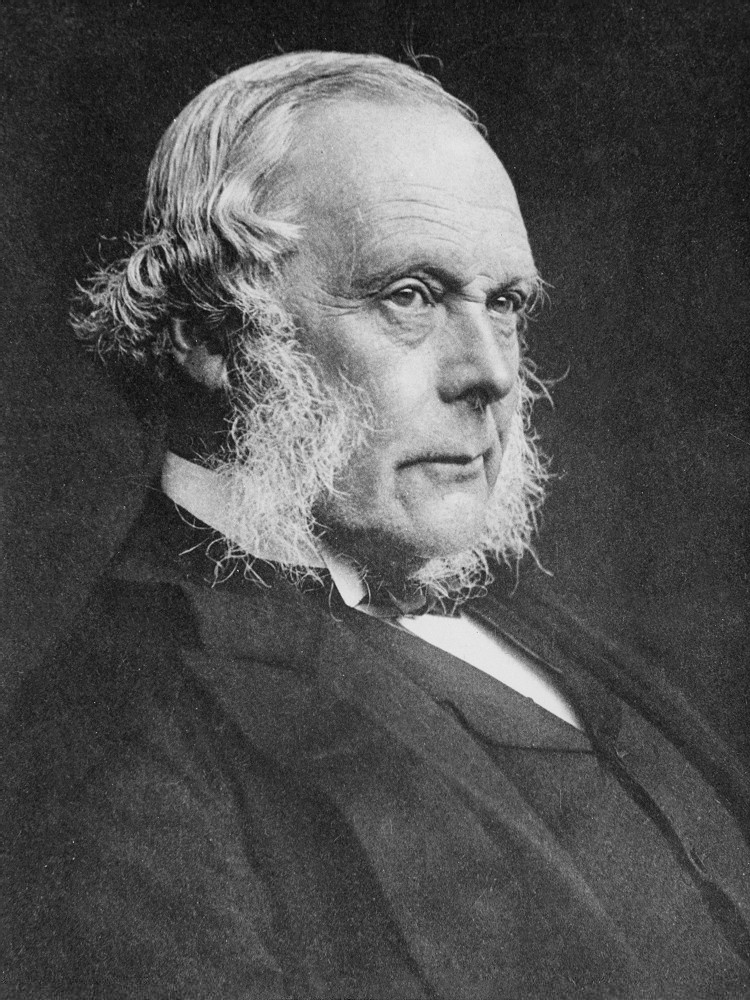
Photo: wikimedia.org
Honorary President of the Glasgow Southern Medical Society and speaker for the evening, Professor Sir Roddy MacSween, relates the life and work of Joseph Lister.
Download the lecture to your mp3 player or listen online:
Librivox recording of On the Antiseptic Principle of the Practice of Surgery by Joseph Lister.
Read by Martin Clifton
Books:
Lord Lister - Rickman John Godlee
Lord Lister, his life and work (1913) - Guy Theodore Wrench
The collected papers of Joseph baron Lister (1909) Vol 1
The collected papers of Joseph baron Lister (1909) Vol 2
The Edinburgh School of Surgery before Lister (1918) - Alexander Miles
The autobiography of Joseph Lister of Bradford in Yorkshire, to which is added a contemporary account of the defence of the Defence of Bradford and the Capture of Leeds by the Parliamentarians in 1642 - Thomas Wright
01 May, 2009
From the minutes: Dr MacIntyre's report on our March 2009 meeting
HONORARY PRESIDENTIAL ADDRESS
THURSDAY, 26TH MARCH 2009
Our Honorary President and Speaker for the evening, Professor Sir Roddy MacSween, was introduced by the President. Professor MacSween has been President of the Royal College of Pathologists and Chairman of the Joint Academy and is responsible for the standard textbook “MacSween’s Pathology of the Liver” – a distinguished career in both pathology and post-graduate training.
His interest in Lister as pathologist as well as surgeon was stimulated by the finding of a microscope with some pathological slides amongst Lister memorabilia dating from Lister’s Edinburgh period from 1853 to 1860. In fact review of the history of microscope and staining technique developments indicated that these could not have been the surgeons own work. Lister’s contact with the development of pathology went back to his father who had been responsible for developing achromatic lenses for microscopy in the 1820’s. As a student Lister had made microscopic examination of specimens. He continued this work in his early years in the College of Surgeons. However staining techniques and then paraffin embedding only developed respectively in the 1860’s and 1890’s.
Lister belonged to a Yorkshire Quaker family who moved to Essex where he had his upbringing. He trained in London at University College and the College of Surgeons before a move to Edinburgh initially for a brief clinical attachment which however led to a permanent post and marriage to the daughter of the then Professor of Surgery, Professor Syme. His work on antisepsis developed during Professorships in Glasgow during the 1860’s and Edinburgh the following decade. He then returned to London as Professor at King’s leading to Presidency of the British Association of Science and the Royal Society, knighthood and peerage. London surgeons were initially sceptical of his views sepsis prevention. It took a few years for him to be fully accepted.
Throughout his career he maintained an interest in pathology which was illustrated by remarkable detail in both drawing and clinical and pathological description of specimens – the latter neatly handwritten on foolscap sheets. Professor MacSween showed a number of examples of Lister’s drawings. These were largely done with aid of the camera lucida, a technique allowing superimposition of the image onto a drawing block to allow copying. Inevitably a lot of the early work prior to the advent of anaesthesia was of skin lesions – psoriasis, icthiosis, scurvy and melanoma. The illustrations covered both macroscopic appearance and cellular microscopy. With the development of anaesthesia more substantial specimens became available – examples included sarcoma and more uncertain cystic bone tumour. Most of these drawings and associated descriptions are housed in the Royal College of Surgeons. The overall impression was of the immense amount of work covered by Lord Lister and the remarkable detail of observation which characterised his approach – an impressive insight into an impressive figure.
Dr Philip Wilson, in proposing a vote of thanks, said he had struggled initially to find common points of interest with Lister but related readily to his non-conformist background and approach to work and teaching, and the remarkable detail of his observations. The President closed the evening by echoing our thanks to Professor MacSween and announcing the date of the Society’s Annual General Meeting – 23rd April.
THURSDAY, 26TH MARCH 2009
Our Honorary President and Speaker for the evening, Professor Sir Roddy MacSween, was introduced by the President. Professor MacSween has been President of the Royal College of Pathologists and Chairman of the Joint Academy and is responsible for the standard textbook “MacSween’s Pathology of the Liver” – a distinguished career in both pathology and post-graduate training.
His interest in Lister as pathologist as well as surgeon was stimulated by the finding of a microscope with some pathological slides amongst Lister memorabilia dating from Lister’s Edinburgh period from 1853 to 1860. In fact review of the history of microscope and staining technique developments indicated that these could not have been the surgeons own work. Lister’s contact with the development of pathology went back to his father who had been responsible for developing achromatic lenses for microscopy in the 1820’s. As a student Lister had made microscopic examination of specimens. He continued this work in his early years in the College of Surgeons. However staining techniques and then paraffin embedding only developed respectively in the 1860’s and 1890’s.
Lister belonged to a Yorkshire Quaker family who moved to Essex where he had his upbringing. He trained in London at University College and the College of Surgeons before a move to Edinburgh initially for a brief clinical attachment which however led to a permanent post and marriage to the daughter of the then Professor of Surgery, Professor Syme. His work on antisepsis developed during Professorships in Glasgow during the 1860’s and Edinburgh the following decade. He then returned to London as Professor at King’s leading to Presidency of the British Association of Science and the Royal Society, knighthood and peerage. London surgeons were initially sceptical of his views sepsis prevention. It took a few years for him to be fully accepted.
Throughout his career he maintained an interest in pathology which was illustrated by remarkable detail in both drawing and clinical and pathological description of specimens – the latter neatly handwritten on foolscap sheets. Professor MacSween showed a number of examples of Lister’s drawings. These were largely done with aid of the camera lucida, a technique allowing superimposition of the image onto a drawing block to allow copying. Inevitably a lot of the early work prior to the advent of anaesthesia was of skin lesions – psoriasis, icthiosis, scurvy and melanoma. The illustrations covered both macroscopic appearance and cellular microscopy. With the development of anaesthesia more substantial specimens became available – examples included sarcoma and more uncertain cystic bone tumour. Most of these drawings and associated descriptions are housed in the Royal College of Surgeons. The overall impression was of the immense amount of work covered by Lord Lister and the remarkable detail of observation which characterised his approach – an impressive insight into an impressive figure.
Dr Philip Wilson, in proposing a vote of thanks, said he had struggled initially to find common points of interest with Lister but related readily to his non-conformist background and approach to work and teaching, and the remarkable detail of his observations. The President closed the evening by echoing our thanks to Professor MacSween and announcing the date of the Society’s Annual General Meeting – 23rd April.
12 March, 2009
From the minutes: Dr MacIntyre's report on our February 2009 meeting
The President welcomed around 50 members and guests and introduced the speaker, Professor Thomas Bourgeron from the Department of Human Genetics and Cognitive Science at Institut Pasteur in Paris. His title of “How far do genes contribute to behaviour” reflects his work in the genetics of neurodevelopment, particularly in relation to autism.
Is there a genetic influence on cognitive function? – yes. The more detailed questions are whether specific genes can be identified influencing specific functions such as language or social interaction, and whether differences in these genes explain behavioural differences. He thought the answer to both questions probably yes. The background to his work is the increasing understanding of the human genome with around 22,000 genes and associated “junk” DNA, the transcription from DNA to protein, and the variable expression of this DNA in different cells in the body. Variations in the DNA are mainly related to Single Nucleotide Polymorphism (SNP) or Copy Number Variation (CNV) where a larger section of DNA is duplicated or deleted. In humans the bulk of the genome is constant – one SNP variability in between 300 and 1200 base pairs. Primates exhibit much more polymorphism. This perhaps reflects the relatively “recent” move of homo sapiens out of Africa with a limited gene pool. One aspect of this work allows identification of which common gene mutations are relatively recent and which date further back in the evolutionary timescale. Some mutations are very common in the population and some much less so. In general the former probably represent low risk mutation and the latter more likely to have high risk to the individual.
Work on autism recognises that it is a spectrum ranging from individual characteristic to full blown disease – we can assess ourselves by looking up the autism spectrum quotient. The work of Professor Bourgeron and his colleagues is exploring the genetic variability that underlies this, looking at CNVs and SNPs in patient groups, mainly from Sweden and France. This work has resulted in identification of many candidate genes and polymorphisms for autism risk. This highlights the general danger of extrapolating predictions from specific gene findings as can occur with the availability of personal genome mapping. He identified five questions which should be applied to any genetic finding – mouse or man?, pilot study or replicated?, frequency and therefore likely impact?, disease specific or found in a range of conditions?, and is it supported by clinical or functional findings?
There is however a developing understanding of what might be going on in autism. Synaptogenesis is the gradual development of neuronal connections increasing from birth through childhood with a decline in adolescence and stability thereafter. Work arising from a number of family groups with autism spectrum has shown defects in proteins involved in creating or stabilising these synaptic connections – specifically neurolipin 4 and neurexan. A mouse model has been created – knock out for neurolipin 4. They appear normal in all respects other than aspects of social interaction. We were persuaded that this included their singing performance with a reduced motivation to vocalise! This may therefore represent a general mechanism for the development of autism influenced by different genetic defects.
Another area of genetic interest relates sleep pattern to autism. Melatonin levels are known to be diminished and it transpires that some autistic patients are deficient in an enzyme involved in melatonin synthesis from serotonin. Melatonin treatment can restore normal sleep patterns in some situations. All this work begins to allow models of understanding of the possible sequences from genetics through biochemistry to functional state. More work is probably needed in identifying different phenotypes in a condition such as autism before trying to link these to particular genetic susceptibilities. The picture is complex, the possible interpretations multiple, and prospects of specific therapies still distant. However Professor Bourgeron is one of an international group of enthusiasts producing rapid progress in this area.
Following a period of question and discussion, Dr MacIntyre expressed the thanks of the Society to Professor Bourgeron for a talk which had covered a complex subject in such a fascinating and stimulating way.
Is there a genetic influence on cognitive function? – yes. The more detailed questions are whether specific genes can be identified influencing specific functions such as language or social interaction, and whether differences in these genes explain behavioural differences. He thought the answer to both questions probably yes. The background to his work is the increasing understanding of the human genome with around 22,000 genes and associated “junk” DNA, the transcription from DNA to protein, and the variable expression of this DNA in different cells in the body. Variations in the DNA are mainly related to Single Nucleotide Polymorphism (SNP) or Copy Number Variation (CNV) where a larger section of DNA is duplicated or deleted. In humans the bulk of the genome is constant – one SNP variability in between 300 and 1200 base pairs. Primates exhibit much more polymorphism. This perhaps reflects the relatively “recent” move of homo sapiens out of Africa with a limited gene pool. One aspect of this work allows identification of which common gene mutations are relatively recent and which date further back in the evolutionary timescale. Some mutations are very common in the population and some much less so. In general the former probably represent low risk mutation and the latter more likely to have high risk to the individual.
Work on autism recognises that it is a spectrum ranging from individual characteristic to full blown disease – we can assess ourselves by looking up the autism spectrum quotient. The work of Professor Bourgeron and his colleagues is exploring the genetic variability that underlies this, looking at CNVs and SNPs in patient groups, mainly from Sweden and France. This work has resulted in identification of many candidate genes and polymorphisms for autism risk. This highlights the general danger of extrapolating predictions from specific gene findings as can occur with the availability of personal genome mapping. He identified five questions which should be applied to any genetic finding – mouse or man?, pilot study or replicated?, frequency and therefore likely impact?, disease specific or found in a range of conditions?, and is it supported by clinical or functional findings?
There is however a developing understanding of what might be going on in autism. Synaptogenesis is the gradual development of neuronal connections increasing from birth through childhood with a decline in adolescence and stability thereafter. Work arising from a number of family groups with autism spectrum has shown defects in proteins involved in creating or stabilising these synaptic connections – specifically neurolipin 4 and neurexan. A mouse model has been created – knock out for neurolipin 4. They appear normal in all respects other than aspects of social interaction. We were persuaded that this included their singing performance with a reduced motivation to vocalise! This may therefore represent a general mechanism for the development of autism influenced by different genetic defects.
Another area of genetic interest relates sleep pattern to autism. Melatonin levels are known to be diminished and it transpires that some autistic patients are deficient in an enzyme involved in melatonin synthesis from serotonin. Melatonin treatment can restore normal sleep patterns in some situations. All this work begins to allow models of understanding of the possible sequences from genetics through biochemistry to functional state. More work is probably needed in identifying different phenotypes in a condition such as autism before trying to link these to particular genetic susceptibilities. The picture is complex, the possible interpretations multiple, and prospects of specific therapies still distant. However Professor Bourgeron is one of an international group of enthusiasts producing rapid progress in this area.
Following a period of question and discussion, Dr MacIntyre expressed the thanks of the Society to Professor Bourgeron for a talk which had covered a complex subject in such a fascinating and stimulating way.
From the minutes: Dr MacIntyre's report on our January 2009 meeting
The joint meeting with the Royal Medico-Chirurgical Society was attended by around 50 members and guests. The President introduced Professor Sir Kenneth Calman who addressed us on Scottish literature and medicine. He was accompanied by Rhona Brown, a colleague from the English Faculty at Glasgow University who illustrated the talk with quotations from the wide range of writers discussed by Professor Calman. It was not an evening to be encapsulated in a brief summary – better to access the Society’s website to appreciate the broad range of literary references. Professor Calman used his study of Scottish literature to comment on a number of health related themes over several centuries – the people of Scotland and their lifestyle, health and health related behaviour, the role and public perception of doctors, description of diseases, and medicines and healing. His authors and poets covered some 600 years – from “the Bruce of the 14th Century” to “Irvine Welsh’s Trainspotting”. This breadth of Scottish reading was clearly well beyond that of most of his audience but he asked us to help him in this continuing study – any new discovery linking literature to medicine would be welcome.
Dr Hazel Scott in giving the vote of thanks reflected on Professor’s Calman’s broad career and range of interests and thanked him for sharing his insight into Scottish literature.
Dr Hazel Scott in giving the vote of thanks reflected on Professor’s Calman’s broad career and range of interests and thanked him for sharing his insight into Scottish literature.
Subscribe to:
Posts (Atom)