Why has Scotland experienced such a profound growth in alcohol-related harm since 1991? The trend line is extraordinary and, Prof. Hanlon argues, must reflect broader societal issues.
This lecture was given to the Glasgow Southern Medical Society on Thursday 10th February 2011 at the Ebenezer Duncan Centre, Glasgow.
12 February, 2011
17 January, 2011
Flying the flag for Scotland - General Practitioners at the Deep End - listen again
Listen to the lecture given by Professor Graham Watt to the Glasgow Southern Medical Society at the Ebenezer Duncan Centre, Glasgow on Thursday 13th January 2011. Prof Watt discusses the work of Dr Julian Tudor Hart, and the importance of continuity of care and longterm relationships in primary care. The Deep End project involved the 100 most deprived practices in Scotland. Prof Graham Watt is Professor of General Practice at the University of Glasgow.

29 September, 2010

14 September, 2010
Lecture syllabus: 2010-11
Click on the link below to view the syllabus:
Glasgow Southern Medical Society
Royal Medico-Chirurgical Society of Glasgow
Glasgow Southern Medical Society
Royal Medico-Chirurgical Society of Glasgow
10 September, 2010
Notice of meeting: Presidential Address
‘BOMAD’
Speaker
Dr Gordon Weetch
Consultant Anaesthetist, Hairmyres Hospital
Date and time
Thursday October 7th 2010, 7pm
Buffet meal available from 6.15
Venue
The Ebenezer Duncan Centre, Victoria Infirmary,
Langside, Glasgow
Future meeting
Thursday, 11th November 2010: Prof Miles Fisher - Diabetes in Scotland 2010 - new
SIGN guideline and new Action Plan
14 February, 2010
Listen to the lecture: Malaria - is eradication a realistic aim?

A thin-film Giemsa stained micrograph of ring-forms, and gametocytes of Plasmodium falciparum
Image: http://en.wikipedia.org/wiki/File:Plasmodium.jpg
Dr Heather Ferguson is one of the team at the University of Glasgow parasitology department. Her work both in Glasgow and Tanzania involves laboratory, field and theoretical investigation of malaria and the plasmodium life cycle.
Download the lecture to your mp3 player or listen online:
23 January, 2010
Notice of meeting: Malaria - is eradication a realistic aim?
Malaria - is eradication a realistic aim?
Dr Heather Ferguson

Image source under Creative Commons Attribution 2.5 licence: http://www.plosbiology.org/article/browseIssue.action?issue=info:doi/10.1371/issue.pbio.v03.i06
Dr Ferguson is one of the team at Glasgow University's parasitology department. Her work in both Glasgow and Tanzania involves laboratory, field and theoretical investigation of the plasmodium life cycle. She is ideally placed to update us on current management of malaria and to consider what the future might hold.
Thursday 11th February at 7pm
Ebenezer Duncan Centre, Victoria Infirmary
A buffet supper is available from 6.15pm
Guests are welcome to attend our meetings.
19 January, 2010
Notes from Dr MacIntyre on the meeting held on 26th November 2009
The 2nd Ordinary Meeting of the session was held in the Walton Suite at the Southern General Hospital. Perhaps partly for this reason and because of inclement weather, the attendance was very poor – only 10 members. The catering was not of the standard generally provided by the Catering Department at the Victoria. Despite this, those present enjoyed an informative evening with much discussion.
The President introduced three speakers contributing to a seminar on “Understanding Children’s Well-being”. Professor Charlotte Wright based at Yorkhill has been Project Lead in the UK for introduction of new WHO growth charts for children up to the age of four. These are to be introduced in January. They are based on growth patterns of healthy breast-fed children in non-smoking and non-deprived backgrounds in six different venues covering North and South America, Europe, Africa and Asia. Intriguingly the range of birth weights and the growth patterns of these children are identical in terms of height, though in the UK babies show a tendency to weight gain so that 6% are above the 98th centile at the end of the first year. Introduction of the charts includes detail for pre term infants and associated gestational adjustment, charts for parents allowing estimation of eventual height, and detail on measurement and use of the charts for health professionals.
Dr Helen Minnis is also based in Child Psychiatry at Yorkhill. The underlying theme of the whole evening was the importance of the first year of life and Dr Minnis started by pointing out the extent to which brain development takes place during that year and can therefore be susceptible to damage. Three identified mechanisms of this are simple delay in normal development, change in susceptibility to stress (particularly gluco-corticoid receptors), and influences on new neuronal development. This can affect different parts of the brain – thus for example the corpus callosum which probably has a role in integrating logical activity in the left hemisphere with perception and intuition on the right. Measurements of cortisol levels can be used as a marker of HPA axis activity. Studies have shown that the normal diurnal variation was lost in Romanian orphanage children and in maltreated children – with cortisol levels particularly suppressed in the latter. Intervention with improved individual child care during the first year reversed this biochemical pattern. It is thought that care and support which eases times of distress is particularly important. The term “reactive attachment disorder” was coined to describe characteristics of the children who have suffered this pattern of neglect. Some of these children are inhibited in all relationships. Others showed disinhibition in reaction to strangers, becoming over-friendly. Work currently underway in Glasgow is aimed at identifying at an early stage children at risk of this type of neglect and attempting close intervention through the usual agencies such as health visiting.
Dr Kerry Milligan’s background is in General Practice but particularly working with homeless and at risk families and in the area of child protection. Recent publicity over cases such as Victoria Climbie and Baby P have made this a difficult area of work with heavy workloads for staff, exacerbated by recruitment problems. Inevitably most of the attention in child protection work is directed at these high profile or crisis situations. Reporting on child protection is dominated by disasters or examples of bad practice. There has been a gradual increase in child protection registrations, particularly in relation to emotional abuse and physical neglect. Against this background there is a need for much more attention to the more general area of child protection. Risk factors can be identified – families where there is substance abuse, homelessness or poverty, young carers, asylum seekers. Early signs of behavioural disturbance are often present, both before and at school age. These can be picked up particularly if there is regular contact with families. Dr Milligan quoted an individual case report from 1945 which illustrated how little change there may have been in the problems and issues of child protection. However the opportunity is there through early identification and intervention with at risk families to improve outcomes.
Following a period of discussion Dr Kennedy Roberts thanked the speakers for their contributions to a small but clearly interested audience.
30 August, 2009
Programme 2009-10, Session 165
Friday September 4th from 1.45pm
Golf outing - Whitecraigs Golf Club.
Thursday October 8th
Presidential address - Dr Saket Priyadarshi
'From malaria to methadone. Treatment works!'
Thursday October 29th
Annual dinner. Roma Mia restaurant, Pollokshields.
Thursday November 5th
Joint meeting with Royal Medico-Chirurgical Society of Glasgow.
'Preparing tomorrow's doctors for practice' Prof Jill Morrison.
7 for 7.30pm RCPSG 242 St Vincent St.
Thursday November 26th (date and venue to be confirmed)
Symposium – 'Health, happiness and protection - understanding childrens' well-being' Prof Charlotte Wright, Dr Kerry Milligan, Dr Helen Minnis.
Thursday January 14th
'Just a little prick with a needle - treating macular degeneration' Dr William Wykes.
Thursday February 11th
'Malaria - is eradication a realistic aim?' Dr Heather Ferguson.
Thursday March (date to be confirmed)
Honorary Presidential address - Dr Kennedy Roberts OBE
'Prisoners, drug users, homeless people and medicine'
Thursday April 22nd, 7pm
Annual General Meeting - Conference room, Floor E, Victoria Infirmary
GSMS Office bearers 2009/10
Honorary President - Dr Kennedy Roberts OBE
President - Dr Saket Priyadarshi
Past President - Dr Douglas McLellan
Vice President - Dr Gordon Weech
Honorary Treasurer - Dr Liam McKean
Secretary - Dr Duncan MacIntyre
Duncan.MacIntyre@ggc.scot.nhs.uk
Dept of Respiratory Medicine, Victoria Infirmary
Royal Medico-Chirurgical Society of Glasgow
Members are welcome to attend meetings of our sister society held at 7 for 7.30pm in the Royal College of Physicians & Surgeons.
View the syllabus of the 196th session here.
22 August, 2009
Listen to the Lecture: Honorary Presidential Address - Joseph Lister
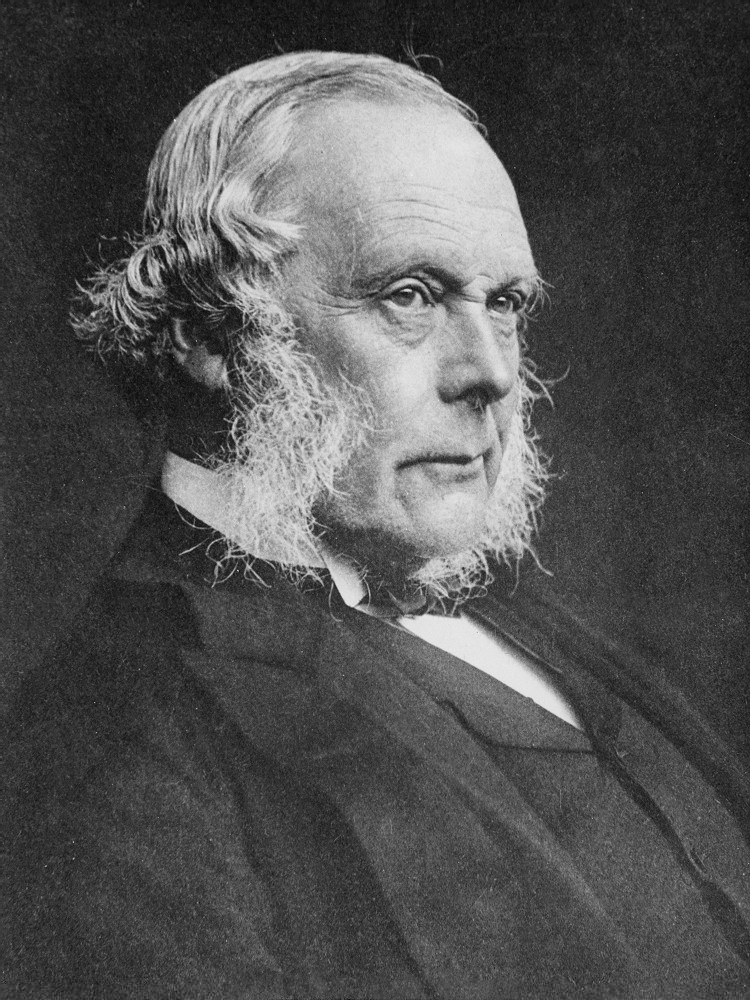
Photo: wikimedia.org
Honorary President of the Glasgow Southern Medical Society and speaker for the evening, Professor Sir Roddy MacSween, relates the life and work of Joseph Lister.
Download the lecture to your mp3 player or listen online:
Librivox recording of On the Antiseptic Principle of the Practice of Surgery by Joseph Lister.
Read by Martin Clifton
Books:
Lord Lister - Rickman John Godlee
Lord Lister, his life and work (1913) - Guy Theodore Wrench
The collected papers of Joseph baron Lister (1909) Vol 1
The collected papers of Joseph baron Lister (1909) Vol 2
The Edinburgh School of Surgery before Lister (1918) - Alexander Miles
The autobiography of Joseph Lister of Bradford in Yorkshire, to which is added a contemporary account of the defence of the Defence of Bradford and the Capture of Leeds by the Parliamentarians in 1642 - Thomas Wright
Subscribe to:
Posts (Atom)